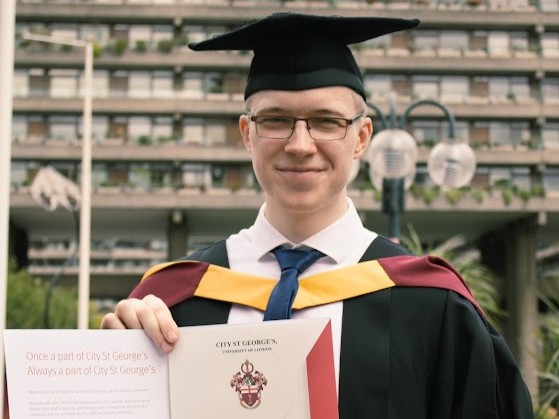
How I graduated at the top of my class
Before reading this I recommend watching Veritasium's video on Luck and Survivorship Bias. I will discuss the strategies I used throughout my studies. They worked because of who I am, my environment, luck and likely many factors I am not aware of. If you are a student, don't take this as gospel.
Choosing the right degree
I am a mediocre classic academic, at A-Level, I finished with a B in Physics and a C in Maths. I chose Computer Science because it avoids my main weaknesses (writing, maths, theory) and is coursework heavy, rewarding my strengths (practicality, problem solving and thirst for novelty in tech).
It is cliche advice. But I've seen people try to power through Computer Science when it's the wrong fit because it is any of: "Valuable", "High-Paying", "Respectable" degree.
People argue, regardless, it is a matter of discipline and hard work to overcome. Yes you can, but should you? (not a rhetorical question)
This poorly drawn graph illustrates my experience.
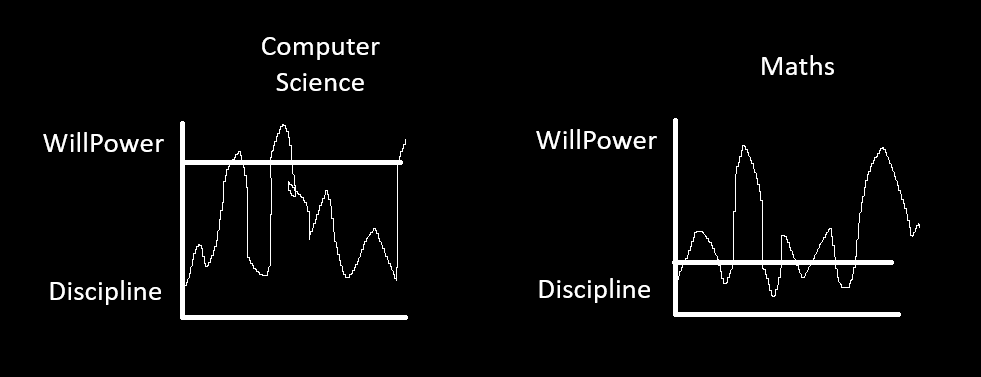
Notice how infrequently I have to tap into willpower compared to Maths? I already consume a ton of engineering content on YouTube, listen to engineering podcasts, love coding side projects and almost everything just clicks. The only times I needed to leverage willpower were the writing and maths bits of the degree.
Willpower is a limited resource that can be slow to recover and I do everything to minimise how often I'm forced to tap into it. If you are already treading water on willpower, and a storm comes - you will sink. You will burn out and have no capacity to perform crunches when needed.
However both discipline and willpower can be trained, expanded and are important to master - but that is a different topic. If you are curious I recommend reading Can't Hurt Me by David Goggins. He became a top U.S. Navy SEAL operator while being genetically negatively buoyant and having a heart condition where his muscles receive half the oxygen needed. He is a master of discipline.
I am lucky to have Computer Science as a good match, I am not sure what I would do, had I been born 100 years ago.
Environment
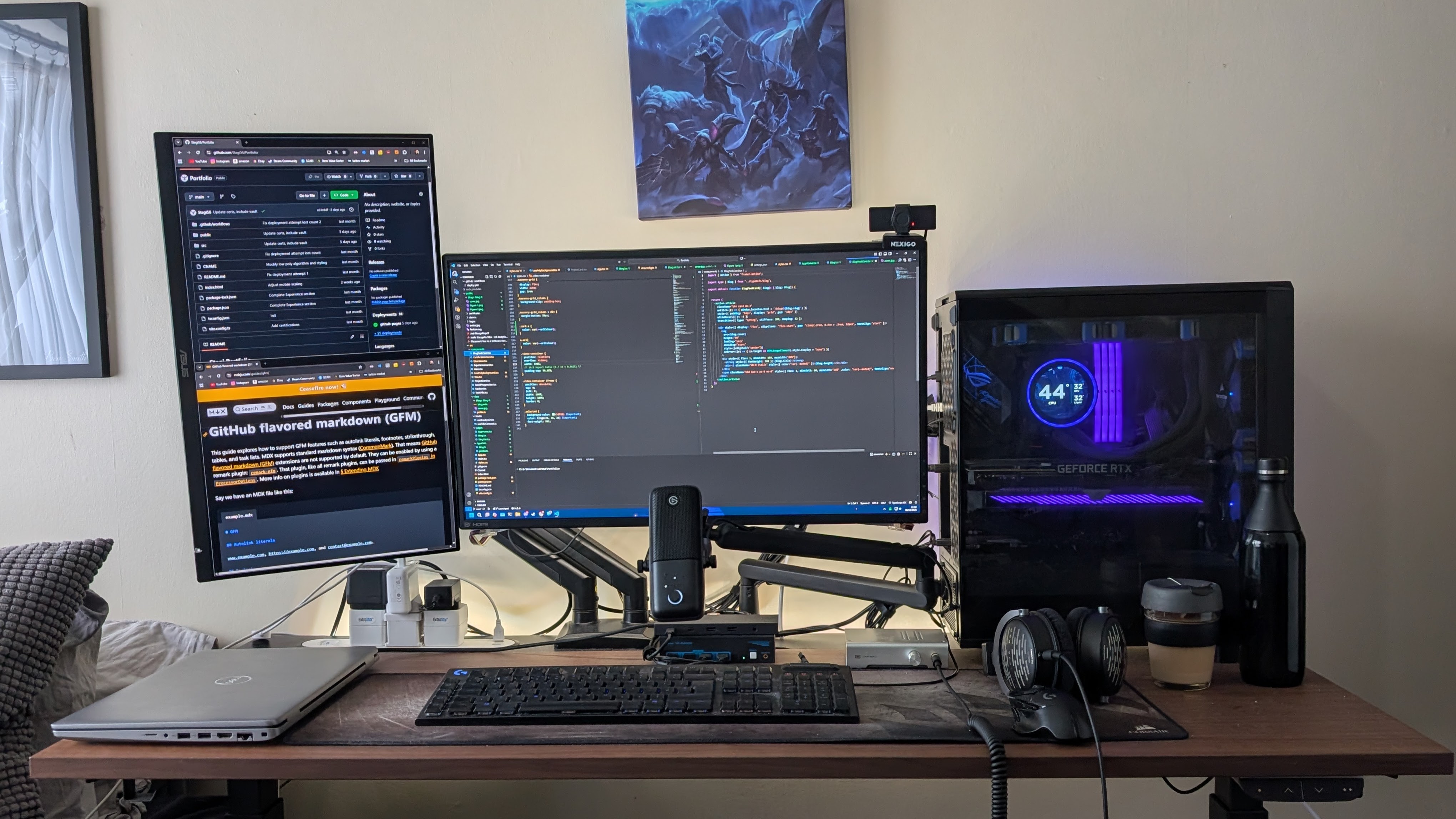
I work best at home, I've built an environment tailored for my workflow, comfort and to minimise strain.
- I've set up two monitors comfortably so I can see more with minimal eye movement and less neck strain.
- Standing desk
- Backlighting which minimises screen/background contrast eye strain
- Comfortable keyboard + mouse
- Dock + KVM to switch my peripherals and monitors to a work laptop with one click
- Dual boot Windows and Linux (more later)
- Smallest room with high window/room ratio (more later)
On the other hand a trip to a cafe or library as a precondition for work, creates an obstacle to start doing work - but it can be a welcome change of environment once or twice a week, despite other drawbacks. If you are curious about making good habits I recommend Atomic Habits by James Clear.
Work Rituals
During COVID, psychologists recommended creating rituals for mental work/life divide at home, which could be just putting on a work shirt. My take on this is having dual boot partitions for Windows and Linux. When I am in downtime mode, I boot into Windows - it has my games installed. In work mode I boot into Linux - no games but has all my dev software.
Light
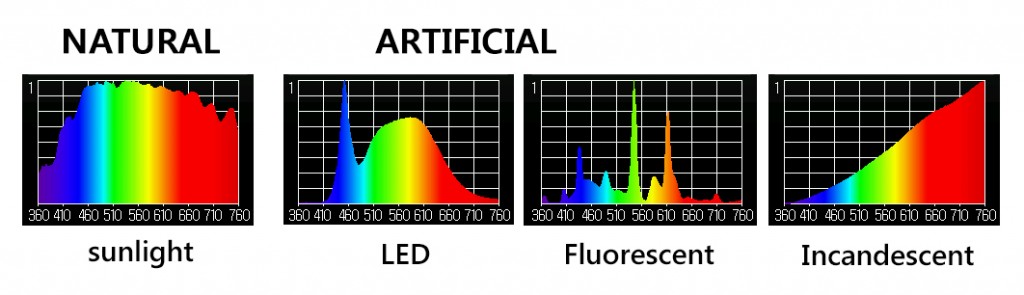
Light is important for a surprising number of systems in your body, in this context, alertness. A bright room with lots of natural light and backlighting if possible creates the best environment. Why natural light? It covers a wider range of the spectrum and the theory is your body is not yet adapted to trigger hormone responses as efficiently as light bulbs produce light.
Just spending just 15min outside, absorbing sunlight daily, maximises reduction effect for all cause mortality and other positive effects.
More on the state of scientific literature by Roger Seheult - Interview on state of sunlight exposure research.
Friends
It is not uncommon for people to cut off friends for productivity and go into "monk mode"
I do not see friends and family as a distraction at the expense of work. Psychologically they are key to unwinding, ordering thoughts and good friends will even point out blind spots, making work that much better.
The only time I would choose not to go out, is if the purpose is to get wasted. A hangover will do more damage than good. Then it is better to be lonely and go on a search for new and more like-minded friends.
Chris Williamson who has interviewed many top performers in various fields has made this same observation.
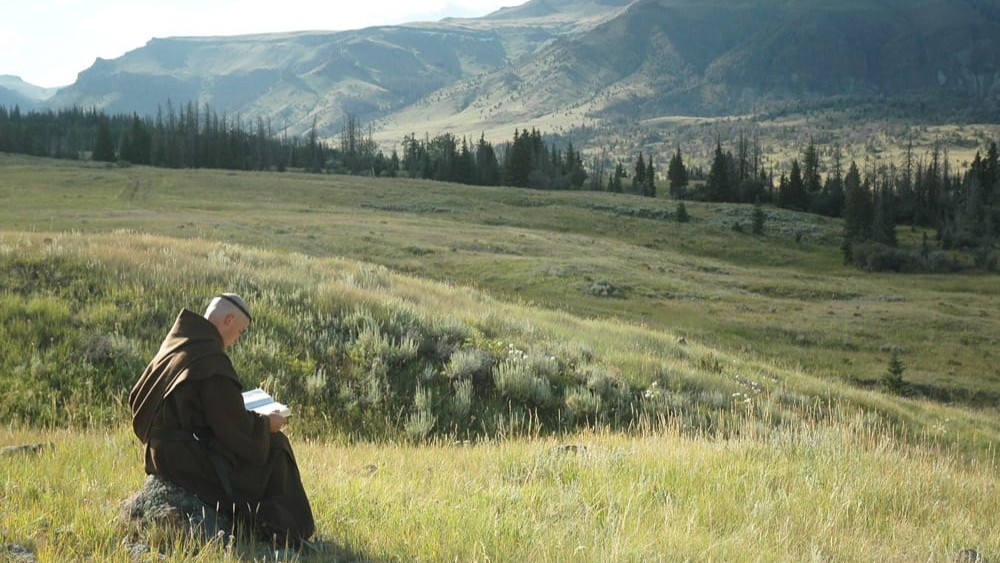
There is a misunderstanding of monks too, many think of them in the mountains far from society meditating or praying. In reality most live very communal lives and one of their core values is being with like-minded monks to support each other and become more focused on their faith.
I always make time to catch up with good friends, regardless of deadlines.
Memes, Breaks and Downtime
Memes are exactly what I need in my day. When solving hard problems and so much of my life being serious and highly optimised, it is easy to become mentally stuck. Spending even just 1 min disconnecting from my challenges, in the opposite domain, resets me to try to tackle a problem from a different angle.
There is a running joke that engineers have 10 coffee/tea breaks a day. I usually do 1-2, but they are also great for stepping away from output and making space for thinking about hard problems. In this domain tea/thinking time is also working time.
High-quality downtime is important, programming is mentally intense. One way I do this is I time-box my work day and have Saturdays as sacred rest time and Sundays for church and family, I avoid blurring life/ work divide. Even though I might technically lose out on extra time spent on problems, the quality when I am back makes up for that and the proof is in the pudding.
No Side Job
Being able to live with parents without needing a part time job was luck and a privilege, it was one less thing to drain my willpower bucket and left more capacity for high quality work. Universities like Cambridge advise capping side work to 6-10hrs.
Sleep
Learning the science of sleep has been useful. I recommend watching this video The Science & Practice of Perfecting Your Sleep. I am far from perfection but understanding the following has improved clarity in my day:
- you cannot catch up on sleep
- importance of light exposure within 15min of waking
- bedtime rituals + habits
- CONSISTENCY of sleeping + waking timing is as important as TIME sleeping
Health
I train in the gym, 6 days a week. I started to lose weight, lower stress and reduce blood pressure. It worked and on top of that I have a physique I'm comfortable in.
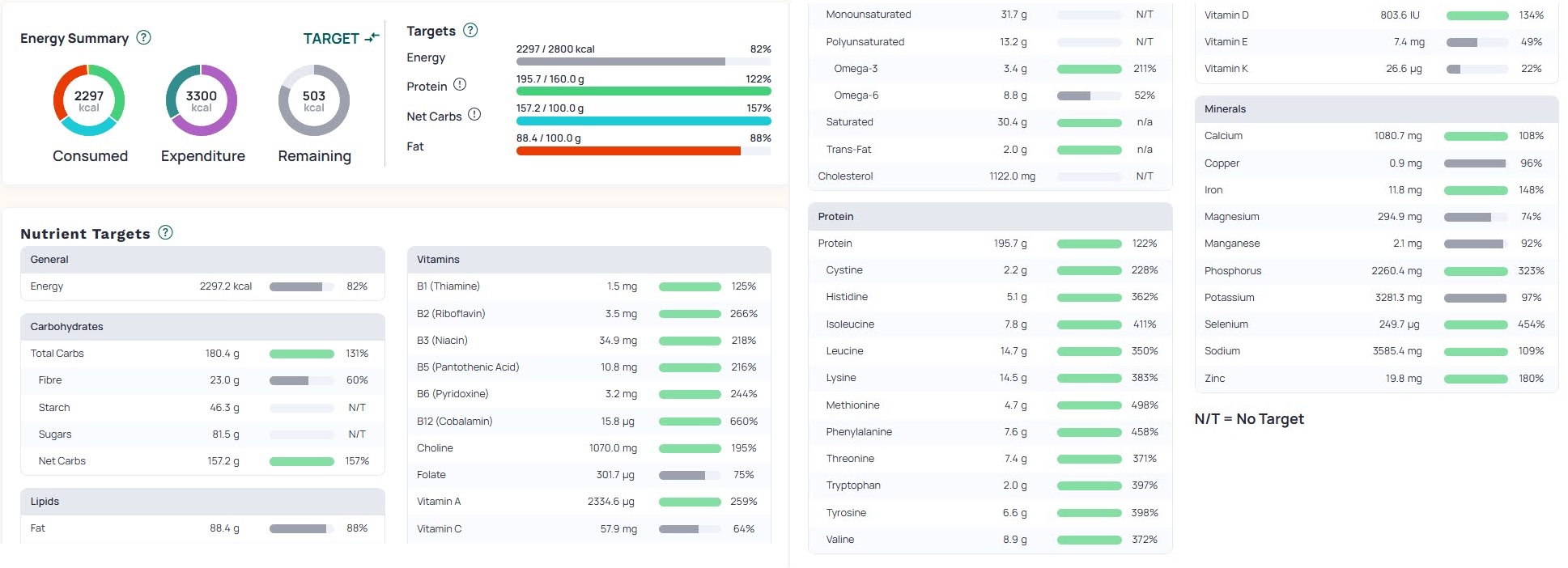
I have optimised my nutrition. Currently I'm on a cut, so I'm in a 500cal deficit. The NCCDB database available through Cronometer has detailed nutrition reports for every food. I do a calculation for the average of intake every 6 months and adjust with either extra veggies or well-tuned supplementation.
Generally reducing stress factors in life, improving fitness and nutrition reduces all-cause mortality, improves quality of life and as a consequence effects work too.
Caffeine
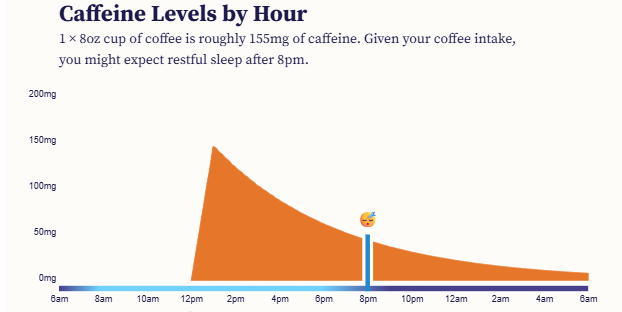
Caffeine is an awesome drug! (When used correctly.) Caffeine half-life can vary anywhere from 1.5 to 9.5 hours, experimenting is the only way to find out. For me if I have a coffee at lunch it will boost my work and last into my gym session in the evening, but not so long it ruins my sleep. This Caffeine Simulator Website is great for figuring out what a sensible caffeine amount and timing looks like for you.
I also do 1-week caffeine breaks for every 3 weeks of caffeine use to prevent tolerance.
Faith
I am a Christian. I've found that time in prayer is extremely humbling and necessary despite how logical I am. It is another way to organise my thoughts and evaluate upcoming decisions.
Motivation
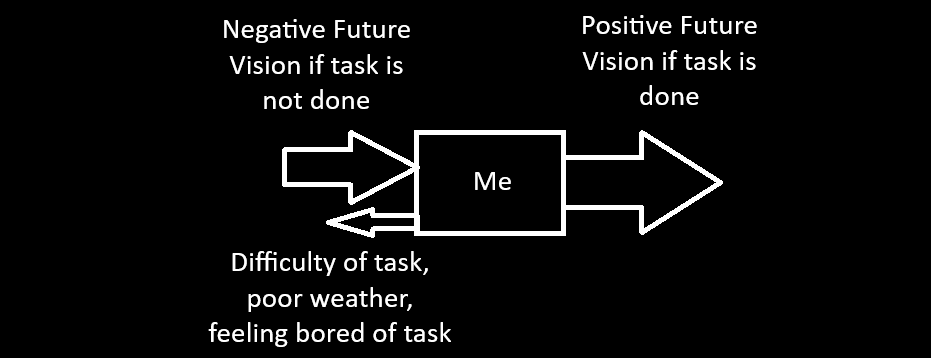
Motivation is a weak force to be leveraged but not depended upon.
It is much better to rely on discipline, the ability to do something regardless of how I feel. The backwards arrow is inconsistent, some days it might be small, other days it might be 20x the size.
But if motivation works for me it is a bonus and there are ways to maximise the arrows pointing forward.
There is a famous proverb, "Hope for the best, prepare for the worst". Many say it, few live it.
"Hoping for the best" is the positive vision, xyz is going to be the result of this - the more detailed, the better. It must be honest, you'd be surprised how many top performers say their motivation is wealth, status or women. Some say this is shallow, but it is honest and these people leveraged that force to overcome great challenges. For me it's novelty, I want to be at the tip of the spear to have the privilege to work on the most novel projects.
The pushing arrow is fear, anxiety, "preparing for the worst". For me this fear was very real and much larger than the pull. Computer Science is a degree with one of the highest early career unemployment rates in 2025, a degree is not enough and there is nothing I would hate more than being stuck in a basic job and no future development prospects. I have a love for engineering and it would be wasted in this scenario.
The two visions, detailed and grounded in reality, work together to create a strong force that drives me forward.
Organisation & Strategy
Leveraging all previous gains and having a lot of extra water in my willpower bucket I applied it to organisation and strategy.
I had smaller visions but associated with actionable strategy, for modules with multiple submissions I told myself two stories:
- Let's get a grade so high on this checkpoint so the next one will be easy and I can achieve a 1st with minimal effort.
- If I get ill and cannot submit later, let's get a grade high enough so I still pass the module.
I tracked all assessments on a spreadsheet and artificially inserted bad future grades to project hard times. This made me perform in the present to succeed regardless. When I got to my final project my average was high enough to graduate 1st-class even with a passing grade in my dissertation.
I always rationed my work into small daily pieces and submitted a week early or at the latest 3 days early. This minimised the need for willpower by avoiding last-second crunches. It also gave me time towards the end to chat with classmates and correct my own work if I realised I misunderstood a requirement.
For courseworks where I could choose what I would do, I always picked something: fun, practical, novel and I could discuss in an interview. This set my discipline/willpower tipping point higher. For my dissertation I went all out: I picked Rust (an untouched language), a Raspberry Pi as target platform (an embedded system I had no experience with) and a dashcam system as the project as I wanted to try out FFmpeg, apply my recent computer vision learnings and make something practical for my mum to use in her car. This ended up being one of my best pieces of work.
Actually paying attention in lectures and doing tutorials
Outside of practice papers I spent little to no time revising for exams.
Occasionally lectures can be dry and it is almost a universal temptation to scroll or play a game. I found actually using the time I dedicated to attend the lectures, focusing and asking questions prevents the need for revision. Some take it further and write lecture notes, but for me writing while listening is distracting.
Letting knowledge marinate
Letting knowledge rest, recalling and repeating that cycle is a more effective method of revision than doing everything the day before.
Whenever I was given 3 practice papers for an exam I would leave a day in between solving and reviewing each one, I would do them over a period of 5 days. This maximised the value I had from solving the practice papers and my dedicated revision time.
Prioritisation
I've learned on my placement year that wise time-cost/result analysis is key to maximising business-relevant delivery.
In university this can be even easier with mark schemes spelling things out for you. If a mark scheme awards 10 marks for a responsive frontend and 10 for CI/CD, I'll chose CI/CD first. It rewards better for how little time it requires.
A criteria like "pretty UI" can also be subjective and relative to the marks awarded or the standard of your peers. There may not be a need to perfect responsiveness if you know it will only run on a standard 1080p PC monitor or get pixel perfect spacing consistency.
Teamwork
The first uni team project broke me and many others morally as often the result is one or two people pickup the majority of the coding and burnout. The most common reasons are others get a sense there is not accountability for their lack of contribution or the coders are poor communicators and others get left behind on the project.
Watching just a few videos on YouTube on how to lead software development teams, being a good teammate, creating healthy team dynamics, trusting and not micromanaging and navigating difficult situations can work wonders. I recommend Healthy Developer on YouTube.
For my second team project, and after studying these things - we scored 98%, without anyone burning out. We focused on autonomy and being "leads" in our dedicated areas; we used a ticket board and standups for prioritisation and to keep everyone looped in; in the end we even had extra time to code bonus features for fun.
Conclusion and Luck
You have probably gathered some of these things might not be feasible, your circumstances might be more or less lucky and some strategies might lead to the opposite effect. I have had the same conclusion from observing many other top performers too. The key is knowing oneself and experimenting to find what works rather than copying a blueprint.
Managing the discipline/willpower tipping line and treating willpower like gold prevented me from burnout while performing.
It was not my plan to graduate at the top of my class, when I received the prize I was not expecting it. Not because I was not trying, but because I was oriented and optimised for seemingly different goals.
My main plan was to minimise my probability of not getting a job and not burn out, I thought the hardcore students who live and breathe their study would surely outperform me. Prioritisation, careful planning, teamwork and other things that one would assume take away from studies: downtime, friends, gym, weekends, health, sleep, nutrition - actually supported me.
Hopefully you found something useful from this, if you see me in person tell me what works for you and what differs :)